What Happens to Your Car After You Sell It to a Wrecker in Perth?
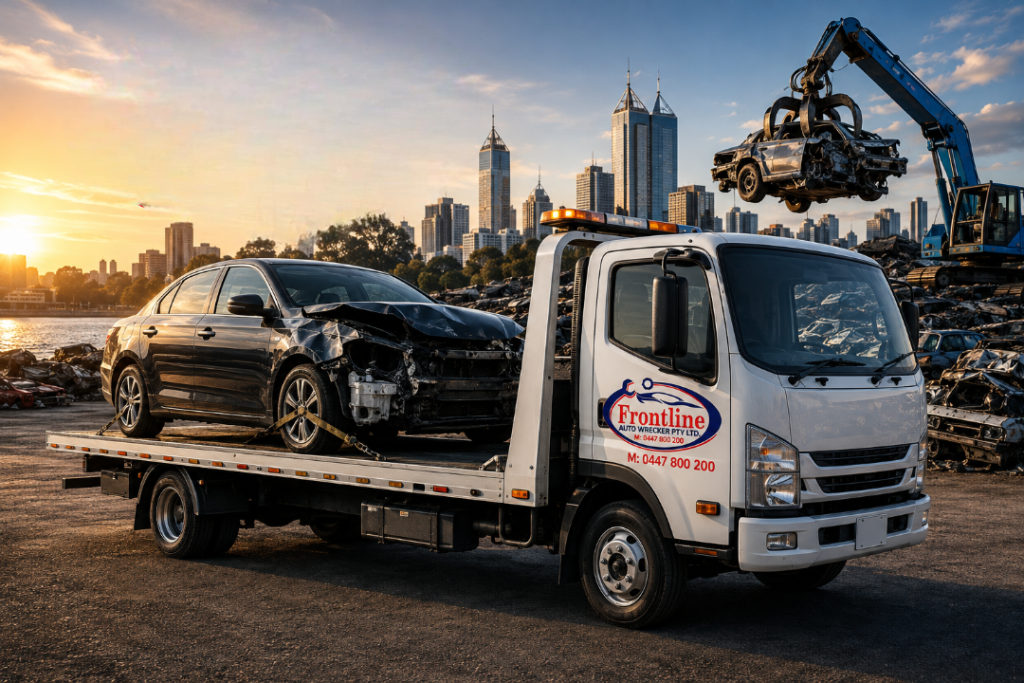
You hand over the keys, the car gets towed away, and for most people that feels like the end of the story. But the vehicle’s journey is really just getting started. So what actually happens to cars at wreckers once they arrive at the yard?
The process can vary from one vehicle and one facility to another, but generally speaking, a car moves through assessment, then parts recovery, then material processing, rather than being crushed on arrival. If the car has been formally written off, WA’s road rules come into play too.
The Car Recycling Process in Perth, Step by Step
The process can vary between vehicles and facilities, but here’s generally what happens once a car reaches the yard, from the first inspection through to material recovery.
Step 1: Your Car Gets Inspected Before Anything Is Touched
Nothing gets taken apart until someone has had a proper look at it.
Cars end up at wreckers for all sorts of reasons: an accident, a failed engine or gearbox, or simply getting too old and expensive to keep fixing. None of that means the whole car is worthless.
A vehicle with a smashed front end can still have a perfectly good transmission and working electrics, and a car with a blown engine might still have several body panels worth saving.
During this stage, technicians check the engine, transmission, electrical systems, body panels, interior, wheels and tyres.
They also look at the car’s age, make and model, since all of that affects what’s actually worth pulling out. There’s no set outcome here. One car might give up a dozen usable parts. Another might only have a handful.
Step 2: Depollution, a Stage Most Owners Never Hear About
At many licensed wrecking yards, dismantling doesn’t start until the vehicle has been depolluted first. This step rarely gets talked about outside the industry, but it’s an important part of processing a car responsibly rather than just pulling it apart.
Depollution generally involves safely draining fluids that could contaminate soil or waterways if left in a car that’s being crushed or dismantled, things like engine oil, coolant and fuel. The exact fluids handled and the equipment used can vary between facilities.
The battery is also typically removed at this stage. Lead-acid batteries are commonly sent to specialised recyclers rather than general scrap, since they need to be handled separately from the rest of the vehicle.
Step 3: The Car Dismantling Process Kicks Off
With the vehicle depolluted, dismantling can properly start.
Depending on the car, this usually means removing the engine and transmission, doors, mirrors, lights, body panels, electrical components and interior parts. Every part gets judged on its own condition rather than the condition of the whole car. That’s the real advantage of dismantling over sending a vehicle straight to scrap. A car that’s not worth repairing can still hold a part that another vehicle desperately needs.
Frontline’s current range of used car parts in Perth comes together this way. Engines, transmissions, panels and electrical components are recovered from dismantled vehicles and tested before they ever go up for sale. Just because a part has been removed doesn’t mean it’s ready to sell. Testing is what tells the difference between a part with plenty of life left and one with hidden wear or damage.
This is also the stage where the vehicle loses its shape. What’s left behind is mostly a bare shell and whatever wiring wasn’t worth keeping, and that shell moves on to recycling next.
Step 4: What Typically Happens to the Rest of the Vehicle
Once the useful parts are out, there’s still a shell left over. What happens next depends on the facility and the material involved, but it generally looks like this:
What’s Left | How It’s Typically Handled |
Steel and aluminium body | Sent for metal recycling, where it’s processed and prepared for reuse |
Tyres | Removed and sent to tyre-specific recycling, since they can’t go through with scrap steel |
Glass | Separated and recycled where facilities allow |
Leftover plastics and fluids | Sorted and processed according to material type and condition |
This table sums up the real difference between wrecking a car and simply scrapping it. Wrecking prioritises usable value first, parts, then materials, before the rest moves through recycling or disposal.
A car with little usable value just moves through this process faster, with more of it heading straight to metal recycling.
What Happens to the Parts After They’re Recovered?
A usable part goes back into the second-hand parts market. Someone repairing an older car might need a replacement transmission, door, mirror or light, and a dismantled vehicle can supply exactly that instead of a pricey new part.
Not every part makes it that far, but its condition, compatibility with other makes and models, and current demand all determine whether a component ends up back on the shelf or in the metal recycling stream.
How much of a car gets saved comes down to a few things. A newer car with damage limited to one area can give up plenty of saleable parts, while an older vehicle with heavy or widespread damage might only be good for scrap.
Make and model matter too, since a hard-to-find part can be worth more than a common one available from anywhere. Every vehicle gets assessed on what’s genuinely usable inside it, not handed a one-size-fits-all outcome.
What If Your Car Is a Written-Off Vehicle in WA?
Selling to a wrecker and having your car legally written off aren’t the same thing. Here’s how it actually works under WA rules.
Is Your Car Now a Written-Off Vehicle in WA?
Not automatically, no. Under current WA rules, an assessor only has to notify the Department of Transport if a vehicle meets specific criteria.
It needs to be a motor vehicle, motorcycle, trailer or semi-trailer, its Maximum Rated Capacity has to be 4,500 kg or less, and it needs to have been manufactured within the last 15 years.
If a vehicle does meet that criteria, it gets formally classified as a write-off and falls into one of two categories.
Repairable vs Statutory Write Off: What’s the Real Difference?
A repairable write-off is a total loss vehicle where the cost of repairs plus salvage value ends up higher than the car’s market or insured value, but the damage isn’t severe enough to meet the statutory threshold.
These vehicles can potentially get back on the road once they pass the required inspections and relicensing steps. The written-off history stays on the car’s record for good, though, even after it’s roadworthy again.
A statutory write-off is a different story altogether. These are vehicles damaged badly enough that they can never be made safe or roadworthy again, and they can only be sold for parts or scrap metal.
A statutory write-off has a written-off label attached and its vehicle identifier defaced, and it can’t legally be repaired and re-registered in WA.
Before the Tow Truck Arrives: What to Check First
Before the vehicle leaves, take a few minutes to check it over properly. Have a look in the glovebox, centre console, boot, door pockets and under the seats.
Toll tags, documents, tools and personal items get left behind more often than people expect.
It’s worth snapping a few photos of the car before collection too, just as a simple record of its condition on the day it left. And if your car has already been classified as written off, check which category it falls into rather than assuming the same process applies across the board.
If you’re still weighing up whether to sell, it’s worth reading up on how cash for car removal works in Perth before the tow truck arrives.
Get Cash for Your Unwanted Car in Perth Today
If an old, damaged or unwanted car is just sitting there taking up space, Frontline Auto Wrecker can take it off your hands quickly and pay you fairly for it. Every vehicle is assessed, usable parts are extracted, tested and catalogued before resale, and the team follows eco-friendly recycling practices for the rest.
Contact us today for a free quote, or give the team a call on 0447 800 200 to arrange collection and get paid on the spot.
FAQs
Can a car that doesn’t run still have useful parts?
Yes. A failed engine or major mechanical fault doesn’t mean the rest of the car is done for. Other components can still be in great shape.
Can I buy parts removed from a wrecked car?
Yes. Tested components recovered from dismantled vehicles get sold as used parts. Just check the part number and compatibility with your car before buying.
Does accident damage automatically make a car a write-off?
No. WA has specific notification and classification criteria, so not every damaged vehicle ends up on the Written Off Vehicle Register.
What happens to fluids like oil and coolant during wrecking?
At a licensed wrecker, they’re typically drained before dismantling begins as part of the depollution process, rather than left in the vehicle, so they don’t end up contaminating soil or waterways.